RESEARCH & DEVELOPMENT
At NEXTCHEM's research and development department we combine scientific expertise, engineering know-how and project management to develop new technologies and improve existing ones. Our R&D activities span different areas and stages of technology development, and NODE, our network of specialized research centers supports the journey from early-stage ideas towards industrial application.AN INNOVATIVE STRUCTURE
Our approach is based on the continuous search for new ideas, upgrading and innovative exploitation paths of our proprietary technologies. The translation of market expectations into combination of technology solutions that are more effective in terms of performance, cost and environmental sustainability is our commitment.
The Core Research & Development structure is aimed at the identification and execution of innovative R&D programs in the framework of specific strategic technological platforms that meet vertical market opportunities, thus enabling the development of distinctive and proprietary processes, equipment and catalysts in the field of green chemistry.
NEXTCHEM's R&D Projects
NEXTCHEM's Operating Research & Development Excellence (NODE) connects scientific research, engineering know-how and industrial capabilities across five specialized centers.
Each location contributes distinctive expertise while sharing knowledge, data and technical experience across the network and with NEXTCHEM business lines.
This integrated model helps reduce duplication, strengthen collaboration, and make the most of each center's specialization. The result is a clearer development path from a promising idea to a more mature and validated technology.
The REBEL project, developed by KT Tech and NEXTCHEM in collaboration with the University of Salerno and the CNR (Consiglio Nazionale delle Ricerche) proposes a process with zero carbon footprint for the delocalized production of biofuels from biogas.
The REBEL project proposes an innovative and sustainable process for the synthesis of biofuels from biogas, consisting macroscopically of two steps: an electrified biogas reforming step, followed by a biofuel synthesis step (bio-methanol, SAF: Sustainable Aviation Fuel).
The GRAFFITI project, developed by NEXTCHEM in collaboration with the University of Rome "La Sapienza", addresses three major challenges in the synthetic graphite value chain: supply vulnerability due to reliance on petroleum coke and foreign graphite sources, high environmental impact of existing production processes, need for renewable, low‑carbon feedstocks to meet future industrial demands.
The core of the project is a new molten‑metal bubble reactor powered by renewable energy developed by NEXTCHEM using its proprietary Natural Gas Cracking technology, subject of two patents filed in 2022–2023, with a third one pending.

The BOOST Project is aimed at implementing the first-of-a-kind commercial plant of MyRemono’s NXRe PMMA modular technology for producing high quality recycled Methil Methacrylate (r-MMA) by chemically recycling secondary raw materials sourced from Polymethyl Methacrylate (PMMA) waste. BOOST is funded by Innovation Fund Programme (3rd call for Small Scale projects).
INITIATE
INITIATE is a Horizon 2020 funded project that reduces waste, GHG emissions from industrial processes, and energy and raw material intensity. As a result, it also increases energy efficiency.
MEWLIFE
MEWLIFE is an EU-funded
project developed by six partners and led by NextChem. It demonstrates an innovative approach to produce microalgal biomass with environmental benefits and economic feasibility by using an integrated phototrophic-heterotrophic cultivation system.
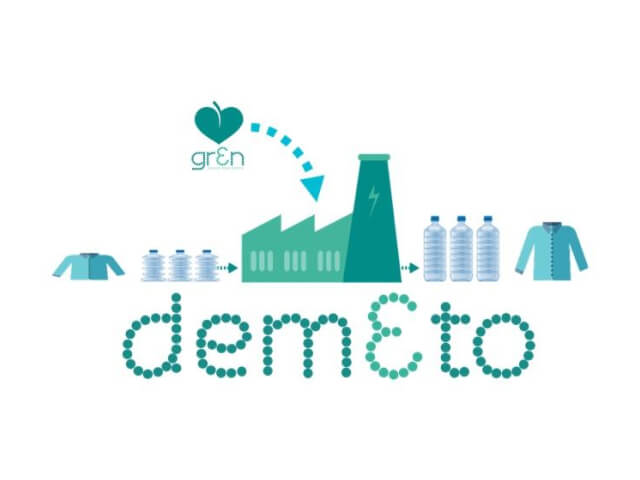
DEMETO
DEMETO is a Horizon 2020 funded project that aims to use microwaves to enable industrial-scale depolymerization of PET in alkaline hydrolysis. NextChem is designing a unit to process 1.5 ton/day of PET flakes, producing high-purity monomers for "virgin" PET production.
DECADE
DECADE is an EU-funded project using a new PEC approach to convert CO2 without water oxidation in order to maximize energy utilization. NextChem is involved in the development of a feasibility model to assess its economic viability.
BIZEOLCAT
BIZEOLCAT is a Horizon 2020 project with 14 partners focused on obtaining light olefins and aromatics from C1, C3 and C4 hydrocarbons. The goal is to use light alkanes as raw material for specialty chemicals, not fuel in oil refining.
PEGASUS
PEGASUS is an EU-funded project under Horizon 2020. It aims to research a new power cycle for renewable electricity by using a solar centrifugal particle receiver and a sulphur storage system for baseload operation.
STREAM
STREAM is funded by the Italian Ministry of Economic Development as part of the "Imprese e Competitività" 2014-2020 program. Developed by NextChem, Quality Engineering and University of L’Aquila, it aims to recover demineralized water for re-use in the production process, resulting in minimal energy waste.
RECENT
The RECENT project is co-financed by the Lazio region and falls under the European Program KETs. It aims to develop systems for storing surplus energy and reducing CO2 emissions from combustion and biogas plants.
BOF2UERA
The BOF2UREA project, funded by the Ministry of Economic Affairs of the Netherlands, aims to help reduce the carbon footprint from integrated steel plants by using a valorization method for the residual gases.
MACBETH
(Membranes And Catalysts Beyond Economic and Technological Hurdles) is Horizon 2020 funded project. It aims to demonstrate membrane catalytic reactor technology at an industrial level. Sustainability is the key driver of the project, as the new technology aims to significantly reduce GHG emissions by more than 20%, with a simultaneous 20% increase in energy efficiency.
Discover how the Nextchem District in Catania blends local expertise, cutting-edge research and global vision.
